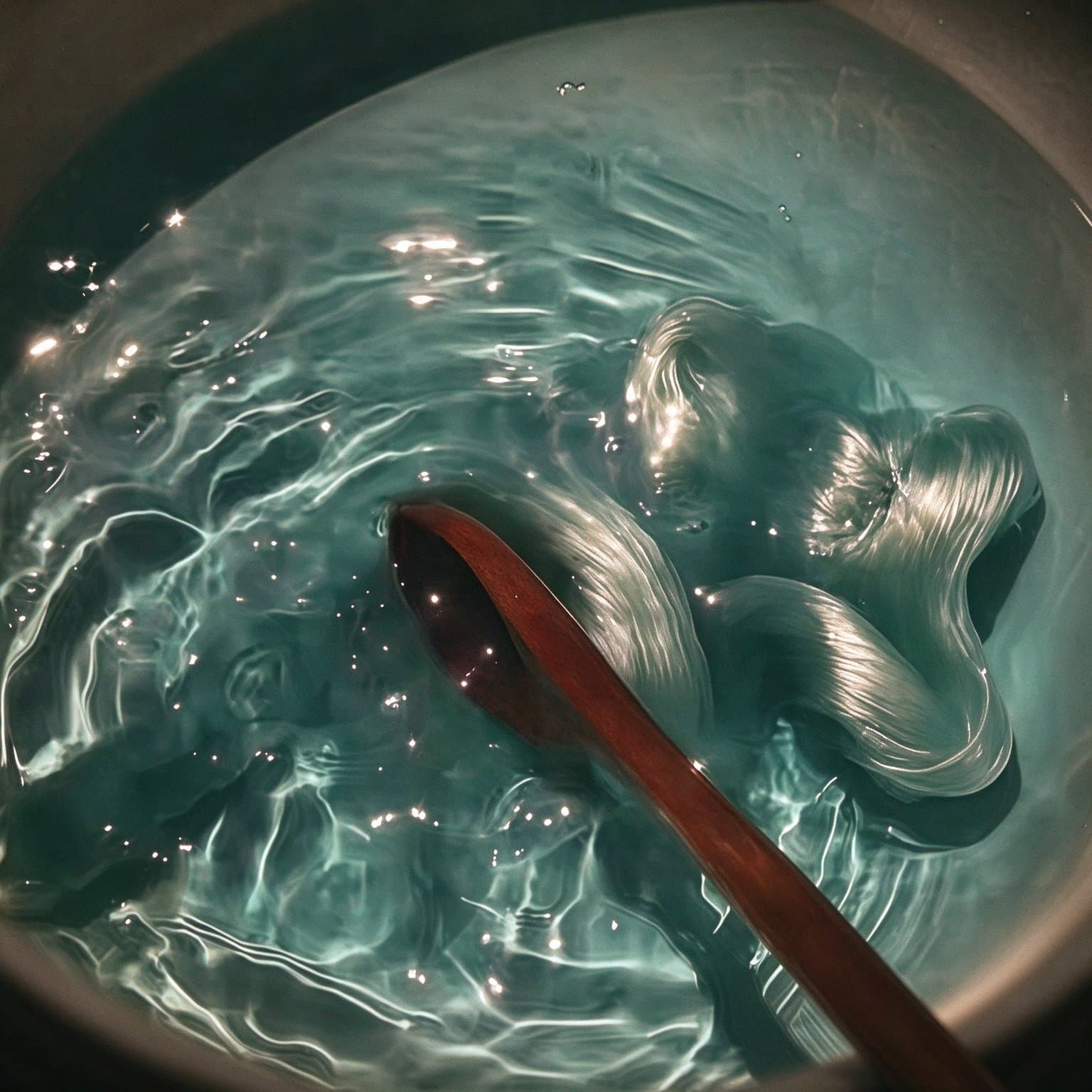
Dyeing the floss
染色
Mulberry silk floss is dyed in small batches, one colour at a time. A petal can hold three shades, so the flowers read as cloth rather than as plastic.
The craft
Ronghua is not printed, moulded or glued together. Silk floss is stretched over copper wire, one petal at a time, and the shape of the flower is decided by hand while the silk is still damp.
The four stages below are the ones that matter. Around them sit the smaller decisions that decide whether a piece looks alive: how much colour the centre of a petal holds, how far the petals open, where the stem bends. Those are not written down anywhere. They are learned by making the same flower fifty times.
染色
Mulberry silk floss is dyed in small batches, one colour at a time. A petal can hold three shades, so the flowers read as cloth rather than as plastic.
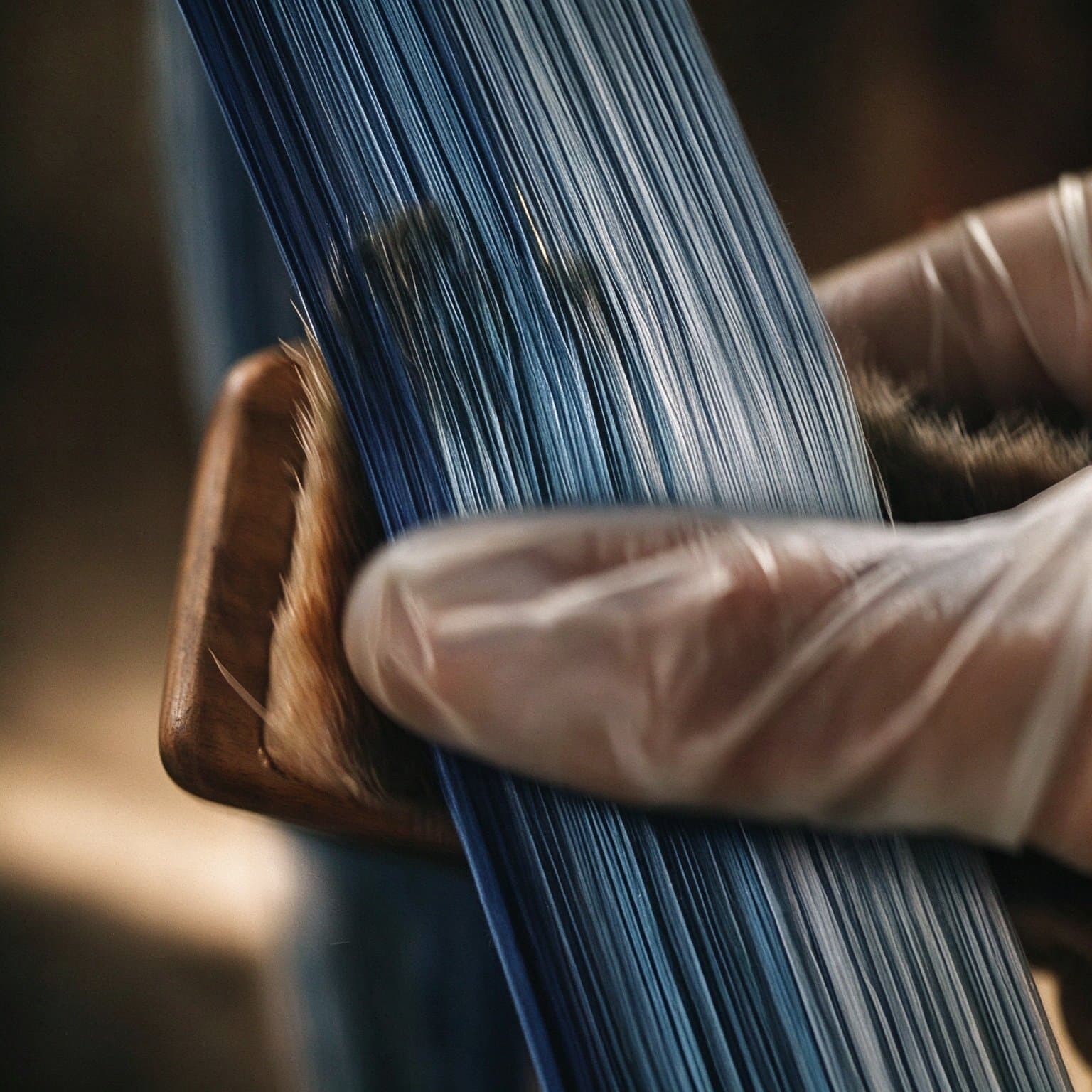
劈绒
Each petal starts as a loop of copper wire. Silk is stretched over the loop by hand until the surface is taut and slightly translucent. No two petals are identical.
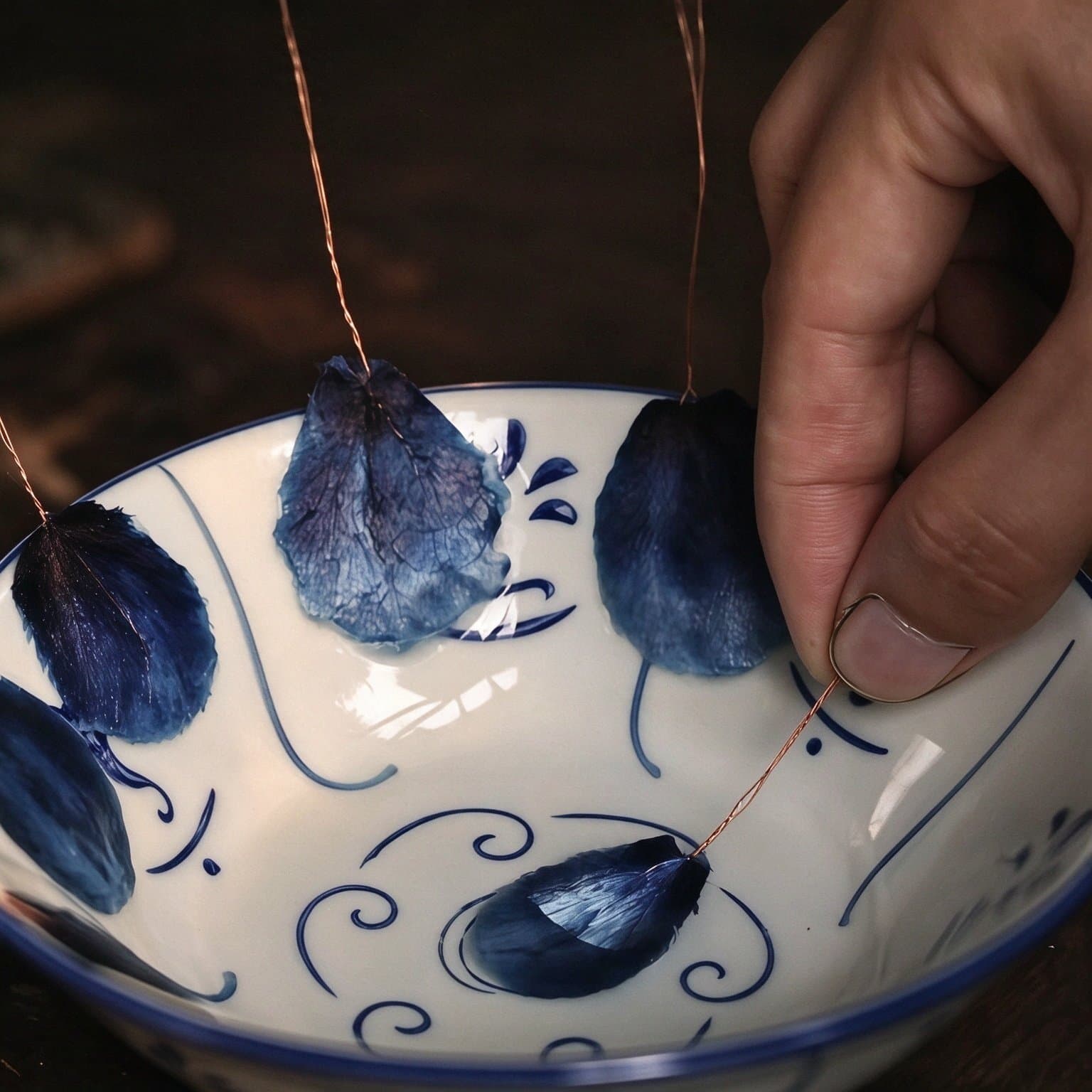
打尖
Petals are pinched, curled and pressed into shape while the silk is still workable. This is where a camellia and a plum blossom stop looking like the same flower.
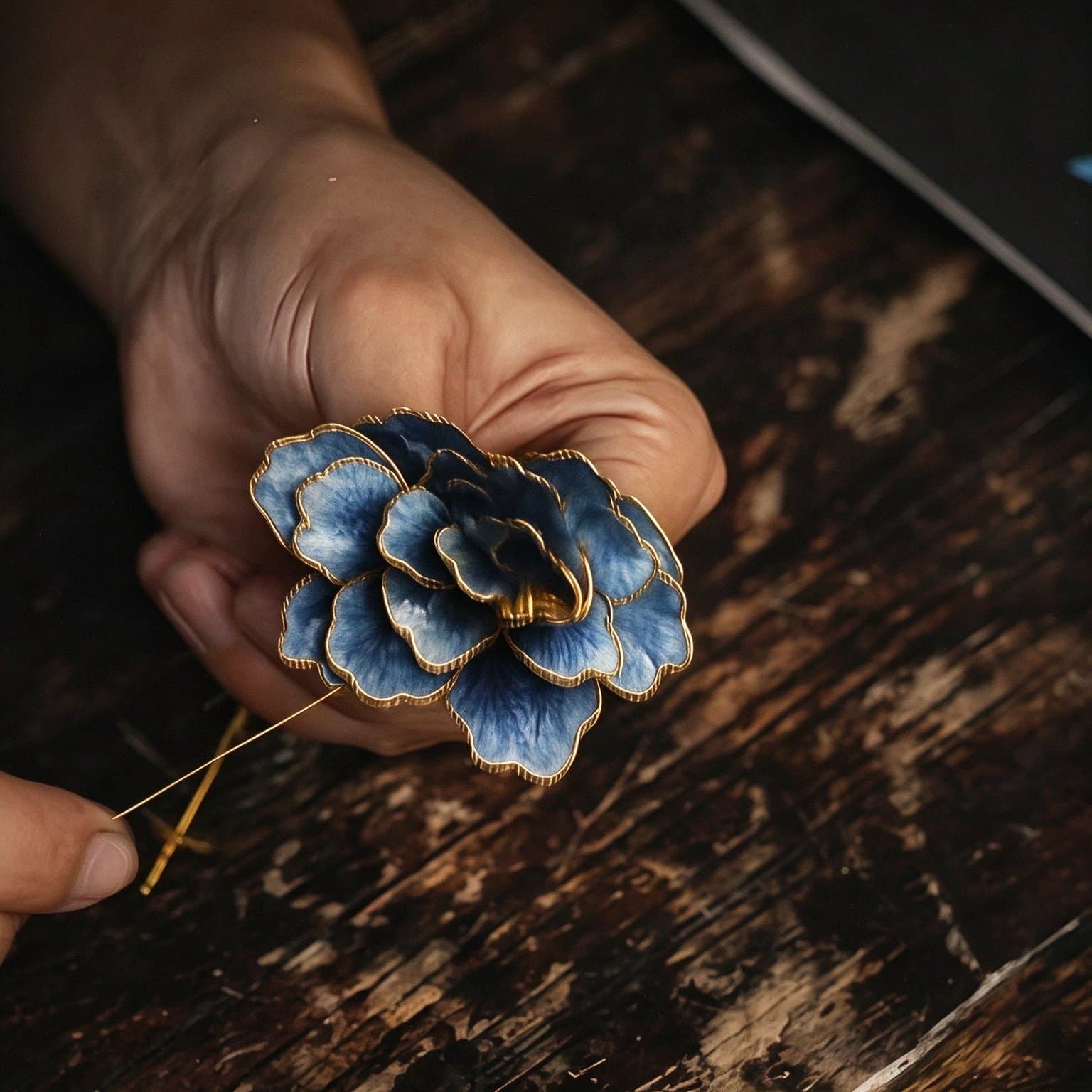
传花
Petals are bound onto the stem in layers, then the finished piece is set into a hairpin, comb, brooch back or frame. A bridal crown can take four to five weeks.
Four materials, all of them replaceable, none of them plastic.
| Petals | Dyed mulberry silk floss. Silk takes colour unevenly, which is why a petal is dipped more than once and why no two petals match exactly. |
|---|---|
| Frame | Soft copper wire, bent into a loop for every petal and leaf. Copper is used because it can be re-shaped after a piece is packed and shipped. |
| Binding | Silk thread, wound by hand at the stem. No glue is used on the petals. |
| Findings | Brass hairpins, boxwood combs and steel brooch backs. The metal is chosen for weight and for how little it moves in hair. |
We do not use feathers. The old palace technique of diancui used kingfisher feathers, and it is not part of what we make.
The listing covers ronghua making as practised in Nanjing and Yangzhou. It is a provincial listing, not a national one, and we describe it that way on purpose. What it recognises is a technique, not a product: the ability to split silk floss, stretch it over wire and shape a petal that keeps its form.
Very few makers still work in the craft full time. Most of the pieces sold as ronghua today are imitation velvet over plastic. Telling the two apart is not difficult once you have held both: silk moves, plastic does not.
A camellia brooch uses around thirty petals. Each one is wired, stretched, shaped and dried before assembly, and the shaping has to happen while the silk is still workable. A bridal crown takes four to five weeks because the frame is balanced against the hairstyle it will sit on.
There is no machine for the stretching step. What you are paying for is time, a material that behaves like silk because it is silk, and the handful of people who can still do the work.